Oof, it's been a while. I won't go into detail over the reasons but it was a rather empty year, art-wise.
I'm now focusing on art as my main goal and I'm pretty optimistic it's going to be a huge change. Let's see this as a gift I want for myself, no matter the cost :)
Just to give perspective on my situation, I no longer have a job for the moment so I have time to practice, in my own way and priority order. I'm really happy to get to decide what I do.
Recently I have :
- sorted out all of my art that's on paper (traditional art?) - all of it since kindergarden! Therapeutic to get to decide what I like or not, and to decrease the amount to what I can be proud of or feel is relevant now. Helps to remind myself of the practice I got and my progress over time
- got all of my art furniture in my new accomodation and I'm trying to tidy it up in a practical way - I need effortless access
- got physio treatment for pain in the wrist; it's probably a cause for my bad motor skills (unless it's the opposite way around) and an obvious obstacle for my art ambitions. I hope, by doing regular training and just getting myself into shape, I might be able to maintain a physical condition good enough for supporting art practice. We forget it's really a bodily experience more than a use of knowledge and time.
Currently I'm doing :
- some work on my mindset, trying to face my old demons and put them behind me (stuff like unfinished projects that I never forgot myself for not nurturing)
- work on my writing skills in order to correct my hand posture and gesture (I'm reworking Japanese Kanji and also using a kid's method for writing French :'D)
- with no rush, contemplating again the first part of lesson one of Drawabox because it's about those motor skills that are a problem for me
- taking time to read a lot, watch stuff, appreciate the productions that inspire me
What I plan on doing soon :
- trying some old techniques I haven't used in a while, just experiment
- going over the material for my most recent projects and decide on a priority
- finishing a few drawing that are in hold since a while and finishing my old sketchbook with random stuff in order to move to a new one
I hope you guys are doing well, thanks for keeping this place alive! <3
I've started this week to work with the goal of drawing comics daily. I'll keep a deadline on Fridays to deliver one or two pages a week. I had done only 5 pages in a two years period, and yet i'm saying that what I want the most is to be a comic author... So I'll start by addressing the issues of productivity and method before anything else.
I started on Wednesday and had to leave today at 10am so I had to rush it but that's part of the thing I want to learn. I'm glad I was able to make it in time, it was hard to focus and get things done but with short period of time drawing and then a good effort at the end, I managed to finish it last minute!
The thing that went worst was the inking, I didn't find the right pens for the first panel. A few things went wrong while inking too! But the main goal is achieved so I'm glad.
Panel 1: He came every year for the Saint Sylvain.
Panel 3-4: isn't this... The 2 of diamonds?
Panel 7: and now for the main act!
Panel 11: We never saw him again.
Critique for last week page:
Inking is inconsistant and messy. Lack of rendering/middle values to give a sense of atmosphere.
Two issues with the frame/the way the page is structured (not sure how to express this in English) that causes problems for understanding and reading.
- sequence panels 6-7 the 180° rule seems broken. I wanted to show the magician /not taking the card/ which explains it still is there at the end. I should have chosen a larger frame to show his body movement looking away from the girl but still facing the crowd.
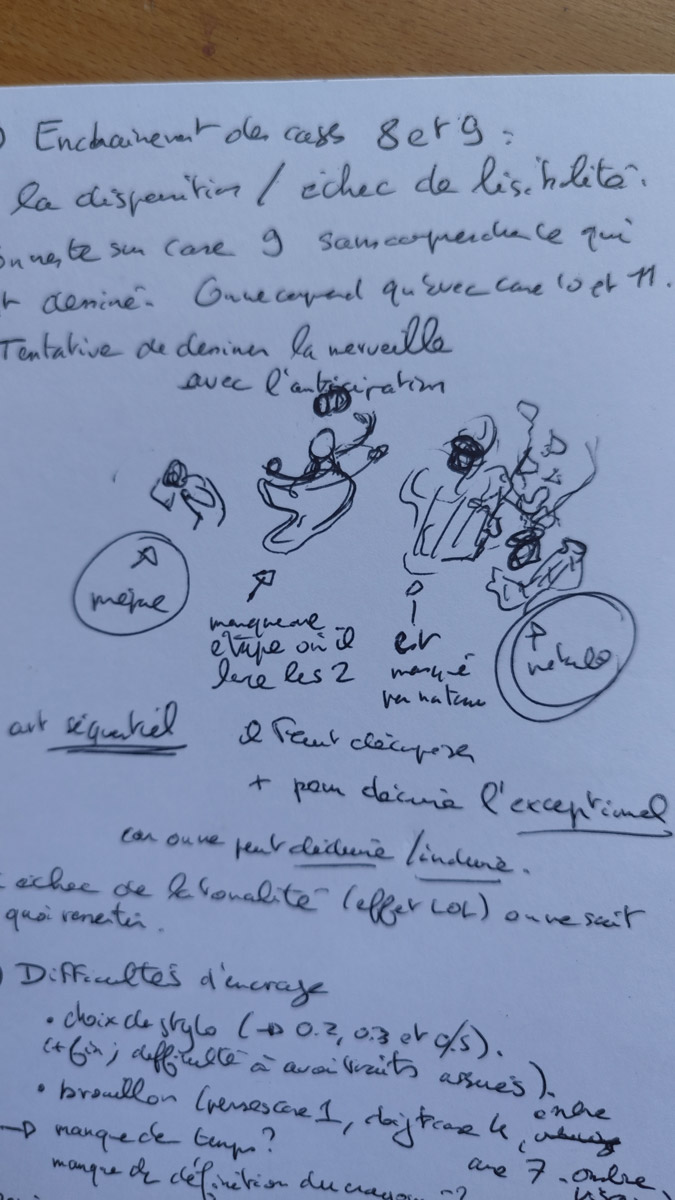
- sequence panels 8-9 the panel is hard to read. I thought I'd draw the anticipation and result but because this is something extraordinary, 2 more pictures were necessary. One throwing the coat, and one with the coat covering the view. At least the first one (else we might think there is a trick which wasn't the meaning I went for)
- the magician looks shady, because of how his face and eyes are always hidden. While I chose to do this, the effect and "mood" it gives as a result isn't what I wanted.
Overall, too many panels and it's still not enough for what I wanted to tell. Trying to do a one page story is difficult.
On the positive side:
- A finished page in three busy days, great effort to get back to work with something rather personal
- Pretty nice to get to give life to an idea from start to finish, even if the delivery isn't good yet
- Variety of panels sizes and framings/scales
This week:
I've formalized my planning with a fixed daily time (3h30) for a set number of activities. It includes 1h35 for the current comic page project, 50 minutes for study and 50 minutes for play/exploration.
I did the Drawabox L1 Lines from the shoulder 2 pages, I'm taking my time rewiewing lesson materials. The physiotherapy helps with "drawing with confidence" and I'm also keeping at it most days. My wrist still feels stiff and painful but I generally can draw without pain for those relatively short periods I do, and I'm regaining some finer control of motor skills with my hand. I don't know if I'll eventually heal but at least my arm is stronger than ever (which isn't difficult) and I have ways to keep it under control.
So yup, I'm going back to Drawabox again. Spatial reasonning and the mind/eye/hand/page process are what isn't instinctive at all for me, so the course was a life-saver when I found it after art school left me with a disappointing level of drawing despite the thousands of hours spent learning back then. I like the slow pace approach and focusing on one thing at a time. I feel it's precisely the set of skills that I lack so I'm eager to go through it. It feels reassuring to find those good old exercices of lesson 1.
I have been consistent, drawing everyday and following my planning. It's really helpful now that everything I must do is clear and constant. All I have to do is make it my priority. It gets easier to focus and be productive right away too with short period of time assigned. It's nice to separate productivity mode (comics) and then have time set to study and draw in a more relaxed manner.
I can feel my mind switching back to becoming more creative again and the art blocks giving way.
Oof, one year has pasted since my last post! I can see that my sketchbook has been very rarely updated and does not really reflect my practice. I was pretty happy with the comic pages though, they represented my attempt at getting back into comic making, which was and still is my ultimate goal.
The good news is that me not posting here doesn't mean I have been inactive. It's far less that what I hoped to achieve, but I produced 5 isolated comic pages including the 2 I showed here last August and September. Then I did a small 8 page doujinshi trying new things (inking with japanese drawing pen, and learning how to use traditional screentones) with an action scene and one more intimate...
Since then I've restarded an old comics project, quite ambitious, and I'm looking for an editor. This was a big art block of mine and actually doing the thing, getting that far is an achievement for me, but at the same time, I'm not satisfied with how much I draw. I want to become more productive and as my topic name says, more consistent. I need more practice, plain and simple. I'm trying to be a professional and I must play the part but I also know I have a lot of weaknesses. I'd rather be realistic about them and work hard to adress them than continue trying to do only difficult things without taking time to train myself.
Elsewhere you're supposed to show stuff that is good. I feel it would help me to have this place to share the things I'm struggling with or that I just have to repeat even when they're not exciting or impressive.
I've shown my pages to a few great French comic artists with various reactions, most summarized by the fact that I need to work on my drawing skills. The better the artist the more my work is clumsy in their eyes! But I had an excellent artist compliment my painting style, and acknowledge that I already had a good foundation but still lacked skill especially with characters. He advised me to work intensively for 6 months, saying that if I could do that, I could make it in the pro world. This really motivated me a lot so here I am!
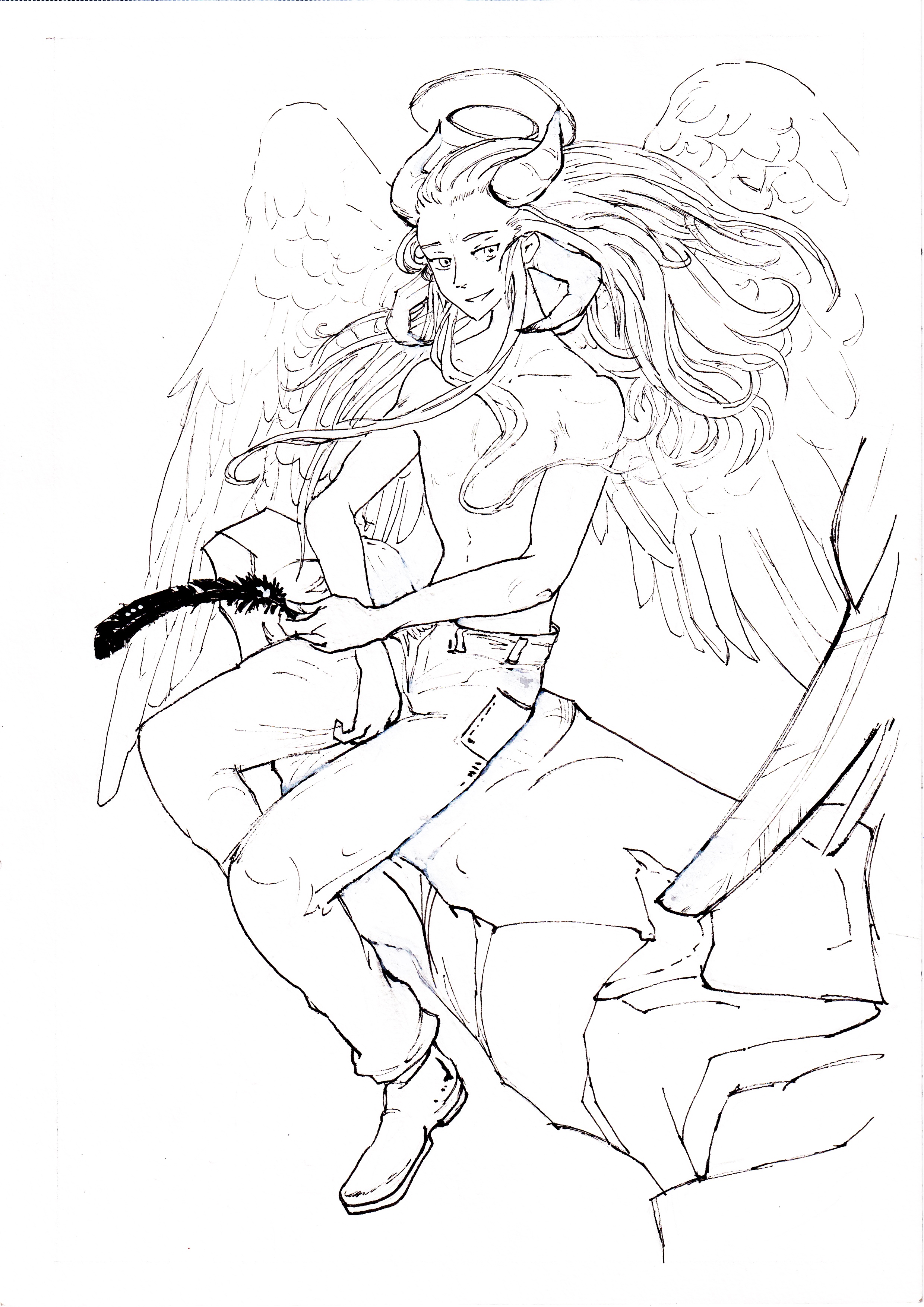
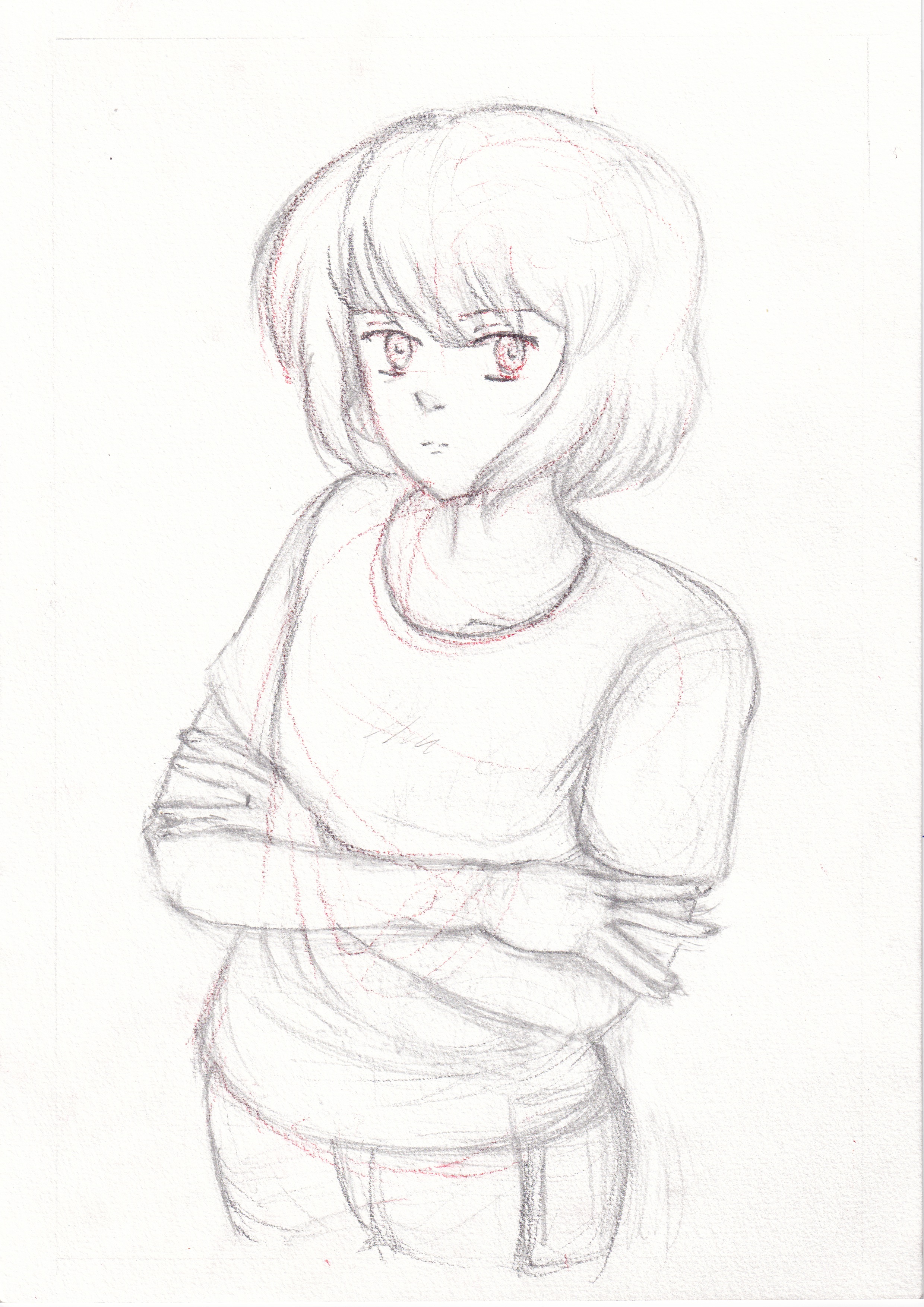
Here are two recent drawings. I've noticed some inconsistencies with the angles, for example the woman has contradictory angles of view for the shoulders and for the rest of the body :/
Here is the first part of the training I did in July. Sorry for the quality, at home I have to scan with my phone but I'll find a better solution later on.
I was using posemaniaks and lineofaction ; just doing that training for two weeks I could see some improvement... then a two weeks change of pace happened I and lost my momentum, woops.
But I'm going to continue now.
I also continued the eternal loop of Drawabox lesson 1 I had started over not so long ago...
And following the advice from experienced artists I met, tried to do a little bit of copy everyday too. So you will see a mix of those in my next posts.
More from July. In the second page I started by drawing the character and the wire like bodies to see how it comes out at first: bad. Then I continued through the third page to draw from imagination, and finished by the copy on the second page (a lot of my studies are from Alex Alice).
I feel it's useful to alternate with my spontanous drawings to compare how wrong my intuitive representation of body is. Although after a few it often gets better, as seen in the left corner of the third page.
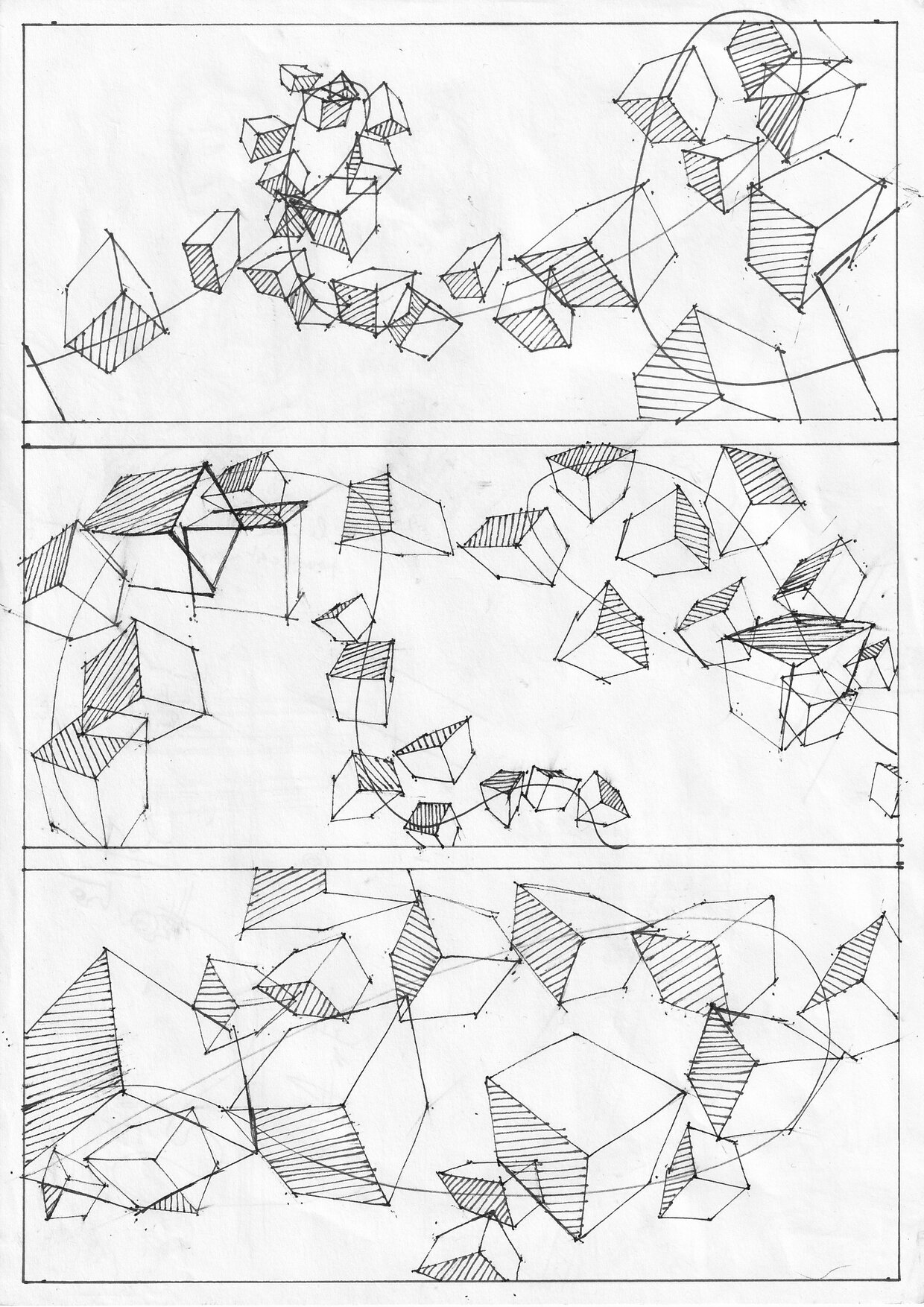
The last ones (cube guys) are also without reference. It's funny how I am often too lazy and upset that my drawings are not good and that it's hard :'D But actually trying and correcting stuff is really satisfying once I get rid of the state of mind that want immediate results.
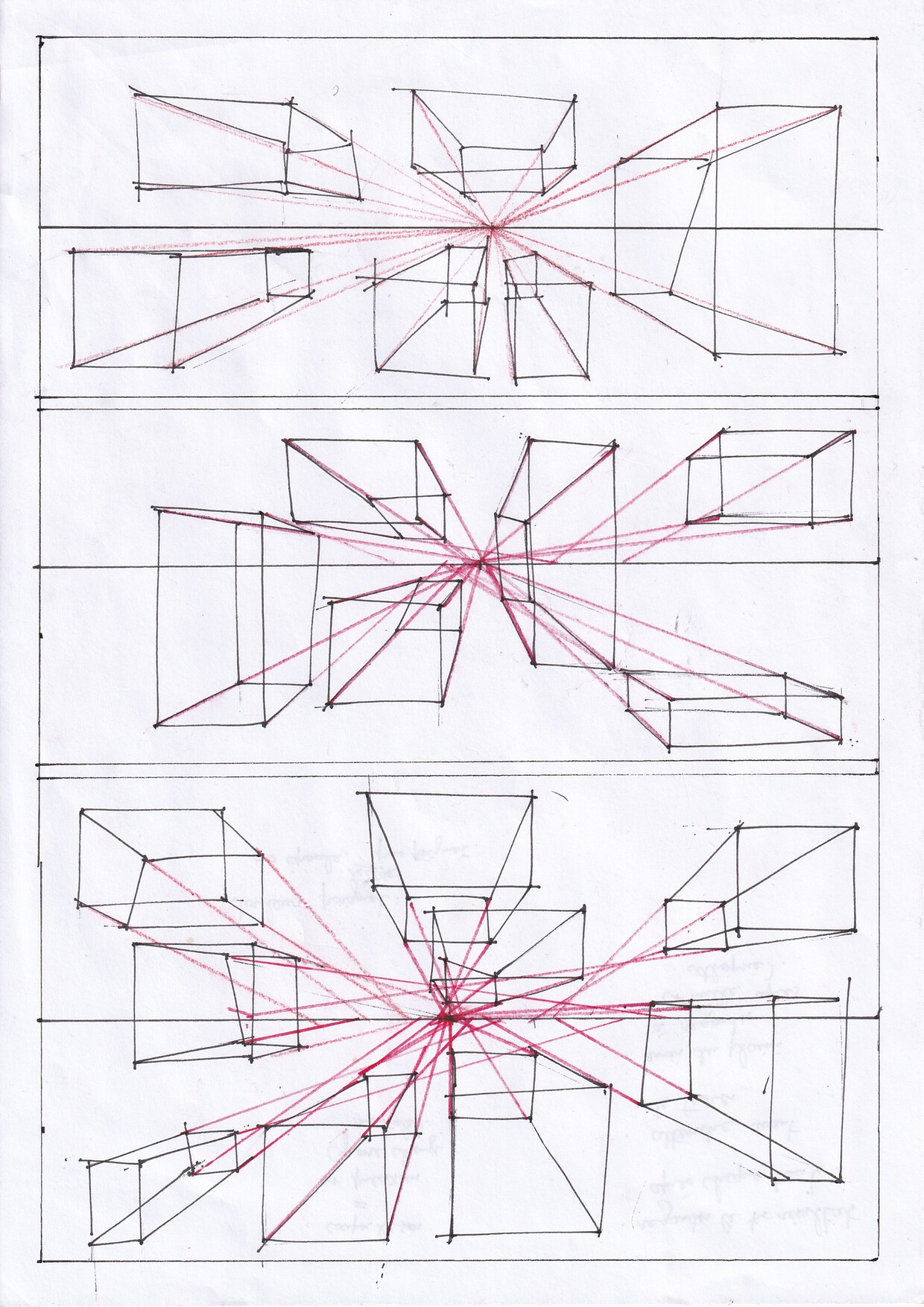
The one point cube are a little rush hopefully you can see that. Also try to free hand them it a much better exercise because plotting point in a real scene will become problematic in a more complex scene in a traditional drawing unless you make it with graphite and trace over it with pen but i think the exercise is not to use any eraser so it fine for the moment it part of the exercise i suppose.
To start drawing cube my advise is to first draw plane on different axis as an exercise first so you can see more easly get familiar to making at visualize ''parallel line'' .Also btw the quickest way to tell if you have done your job properly in 1 point perspective is to check if you vertical and horizontal match your frame .To ease the process when building a cube or a box star with a square to help yourself start the square look for the segment of that square that is the closest to the frame(edge of the paper if you prefer) of your scene and move slowly toward object at the center of the page this way you can compare your vertical &horizontal angle against something that as properly been constructed you can also compare you horizontal pretty easily if you put down the horizon line that basically like you just gave yourself 3 horizontal guide so you can check all your square side may they be vertical or horizontal. To reduce visual noise you can try to draw 3 or 4 box so you see you line better or you can use a different pen thickness for your vanishing line and the cube you can also try to use more of the page because right now there is still a bit of space left on your paper to be use or you can use the whole page but generally result in bigger line which can be problematic if you didn't train for long enough .
Thank you for your feekback Darktist. I will try to improve my segments parallels to the frame. I did improve it already while doing this exercice, but it proved harder than expected.
The challenge in this exercice is supposed to be finding where the edges that are in the depth dimension go (angle and lenght) without using a ruler to trace back to the vanishing point. The reddish lines are here to show where I missed.
But because I lack accuracy in my line work, I would fail to draw proper rectangles (like you saw, they are not paralel to the frame) which also affects the perspective and increases the mistakes in the back face of the box...
I agree that they look sloppy, but this is a lot harder than I expected :'D
-
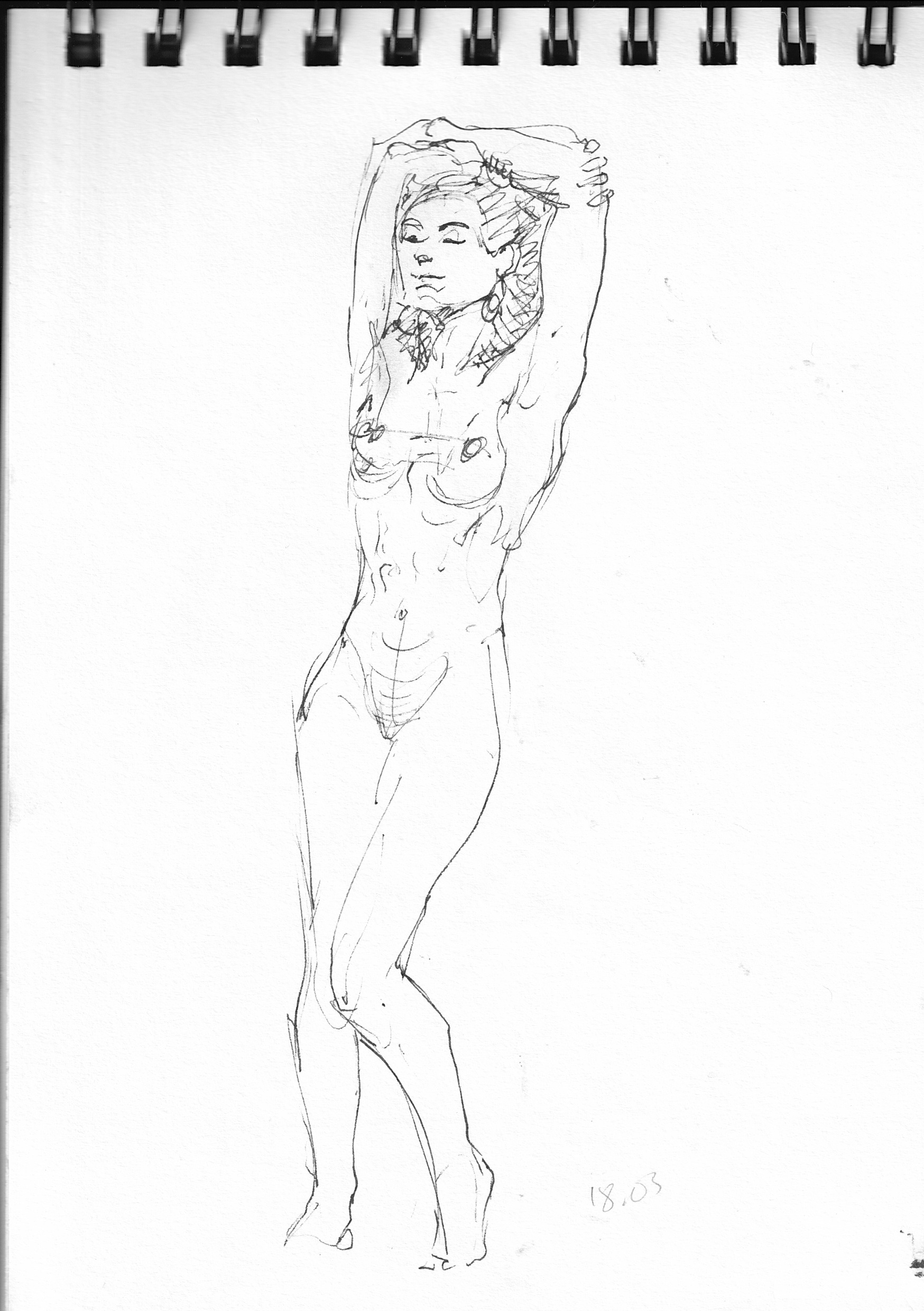
Here is my sketchbook from December 2025 to March. It’s dedicated to my studies. Everything is from real life (except an exhibit about manga). I had a spike of activity in December where my lines were getting much better, and then it’s very irregular with a little bit of nude model in March. I did more life drawing on other frames.
I really like some of those drawings but the consistency part is not there every time I stop drawing even for a few days or weeks.
I put those even if they are older because it's useful to have some reference when I will be doing the same sort of work again.
Really nice work on that tree roots/ rocks/waterfall image. I think there's some really good stuff happening in there. Waterfalls and stuff can be tough especially with ink, just doing it a few more times and trying out a master copy or two of some other artists that do cliffs and waterfalls really well would probably give you ideas of how to convey the water more clearly.
I saw that you're doing drawabox (or were doing it). I think their exercises (along with Peter Han's dynamic Bible studies) can be really good, though if you're looking for something similar to really push drawing fundamentals, be sure to check out Athoro Challenge 52 (he has a youtube video about it and a Patreon if you want deeper tutorials of what he discusses). I've been doing it and finding it really helpful.
Keep up the good work, looking forward to seeing more of your progress in here : )
(Edit: sorry I totally missed your page 2, my comment was from the end of your page 1)
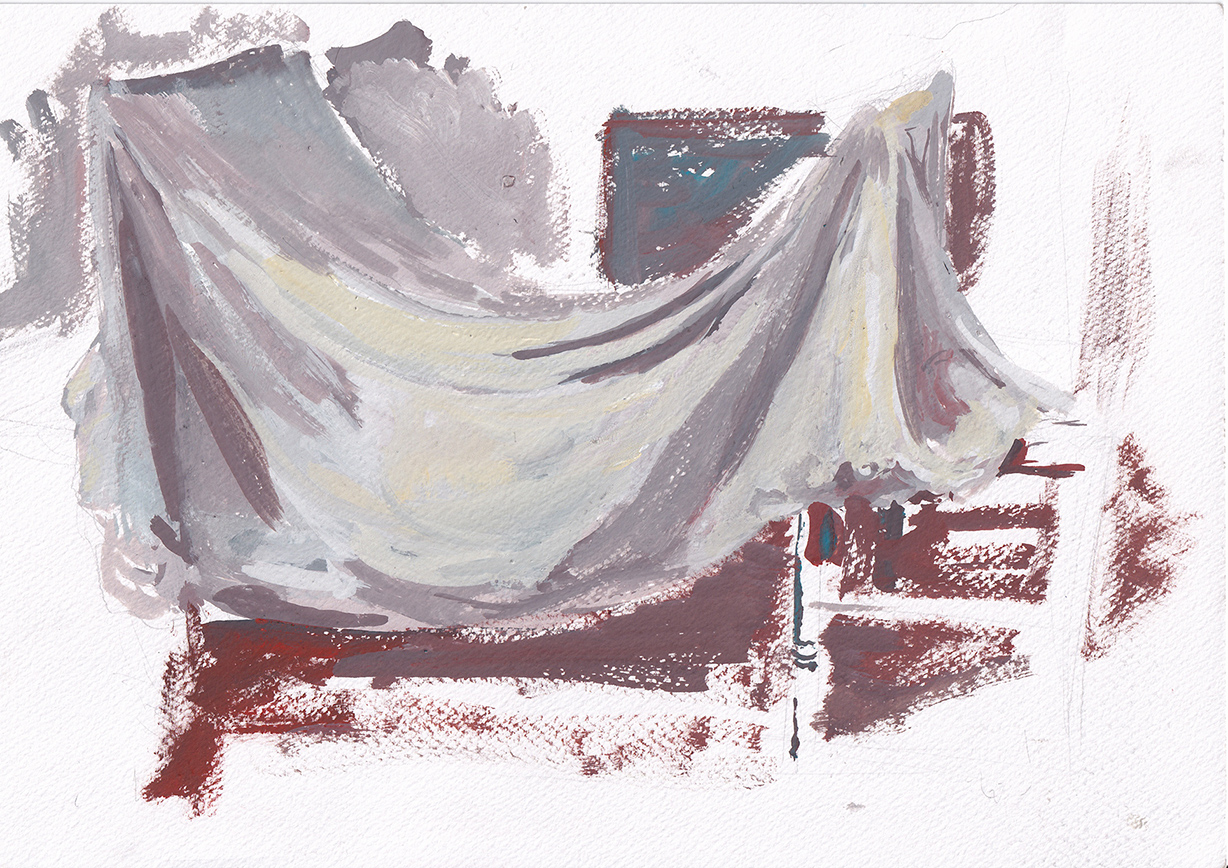
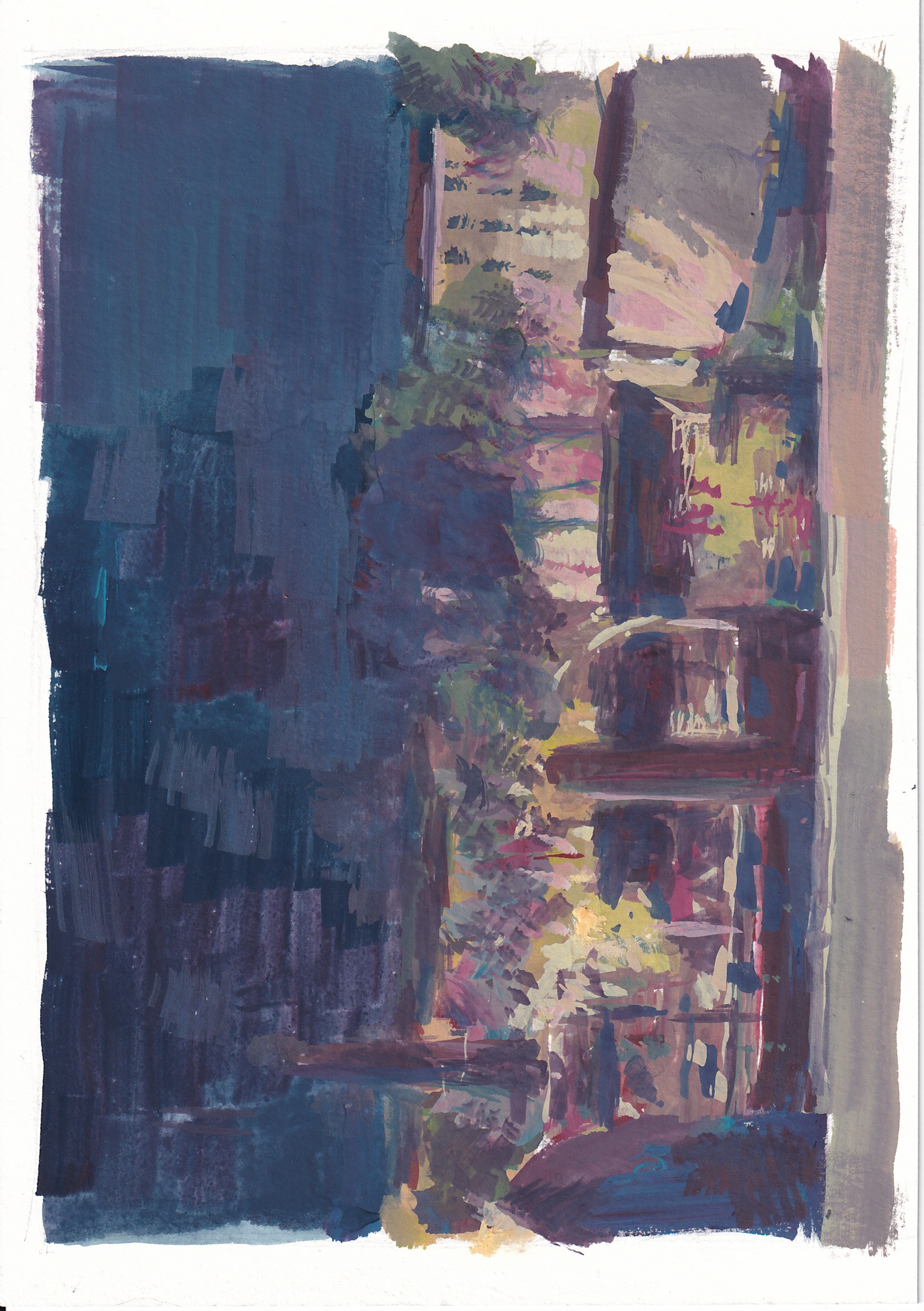
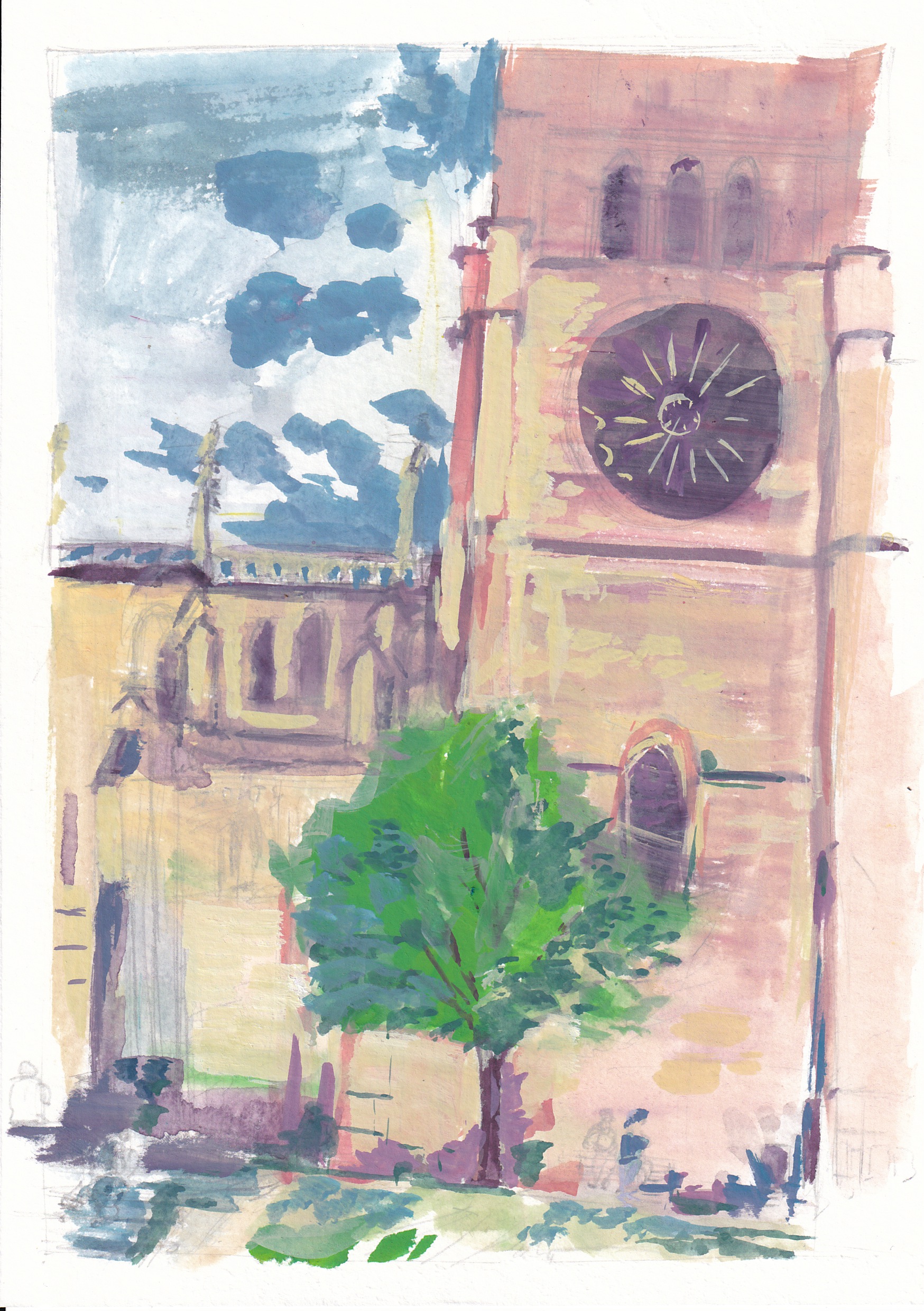
Recently I started to try gouache with real life things. I hadn't used it in 10 years and I'm not sure if I ever knew how to do it. Like everything, it's worst than I expected, but I feel like today's church is a little better with zones and masses.
I've found a group in my city that paint using gouache every Sunday and it's really nice to join them and try this. I'm looking forward using the advice I got.
I'm also almost done with Drawabox lesson 1.
@Jeremygordonart : It's actually nice to have feedback on my previous work! The waterfall was done using a method from a book, I certainly have to gain to work from artists and maybe photography too...
Regarding Drawabox and similar things, thank you for giving me other references. Peter Han's book looks amazing, if I'm not mistaken he's the teacher Uncomfortable took inspiration from for Drawabox?
I'm probably going to try and finish the course on Drawabox first, this way I can go over fundamentals all over again with the other methods afterwards, instead of repeating the same thing.
I'm also discovering the Challenge 52... It's really exciting to see so much learning materials!
I'm very excited to announce I've finished the lesson 1 of Drawabox! As we say in French you could say "ça m'en touche une sans faire bouger l'autre" but my first attempt at Drawabox was in 2016 and I've tried it a few more times. I have a blurred memory of the first attempt, because I think I had then finished lesson 1 and started lesson 2, without doing the 250 boxes challenge.
But then my wrist got hurt and I had to stop drawing for almost one year. I had then started over many times in 10 years, but never finished lesson 1 again.
You can find one of those attempts at the beginning of my thread in 2024...
Drawabox lessons take a lot of time to read, watch and assimilate, and the homework is, for me, quite difficult. There are 15 pages of homework to do in lesson 1, and the whole course is only 7 lessons.
Each exercice is meant to train your brain to incorporate some new skills, and it focuses mostly on spatial reasonning.
It can look boring and technical and is supposed to be compensated by the 50% rules, where you spend as much time on training and on doing things for yourself...
But for me, it was a game changer that unlocked a lot of things after I got blocked in art school. I think the fact that the course creator has aphantasia, just like me, is not a coincidence. I had taken a lot of bad habbits (very messy sketching, a tendency to do random lines then correct, bushes of strokes), as I rely more on feeling than sight to draw. It had gotten to the point where, disliking my drawings, I would almost look away from the page, and my eyes don't naturally focus when I draw. I have to retrain them as well as my hand (which had bad accuracy, not helped with injuries) and this method is perfect for that, because with more complex things, my brain gets overwhelmed with the difficulty and won't consider line making or rewrite the way of doing things. Here it's gradual and focuses precisely on my weaknesses. So I'm not sure how good this method is for someone who is already accurate, but in my case it felt like something clicked and I realized what the act of drawing was instead of stupidely attacking my paper with my pencil.
Anyway, hurray for reaching that point because it was long and difficult!
I'm going to add a little review of the exercices so that this is more interesting to look at for someone who didn't do them:
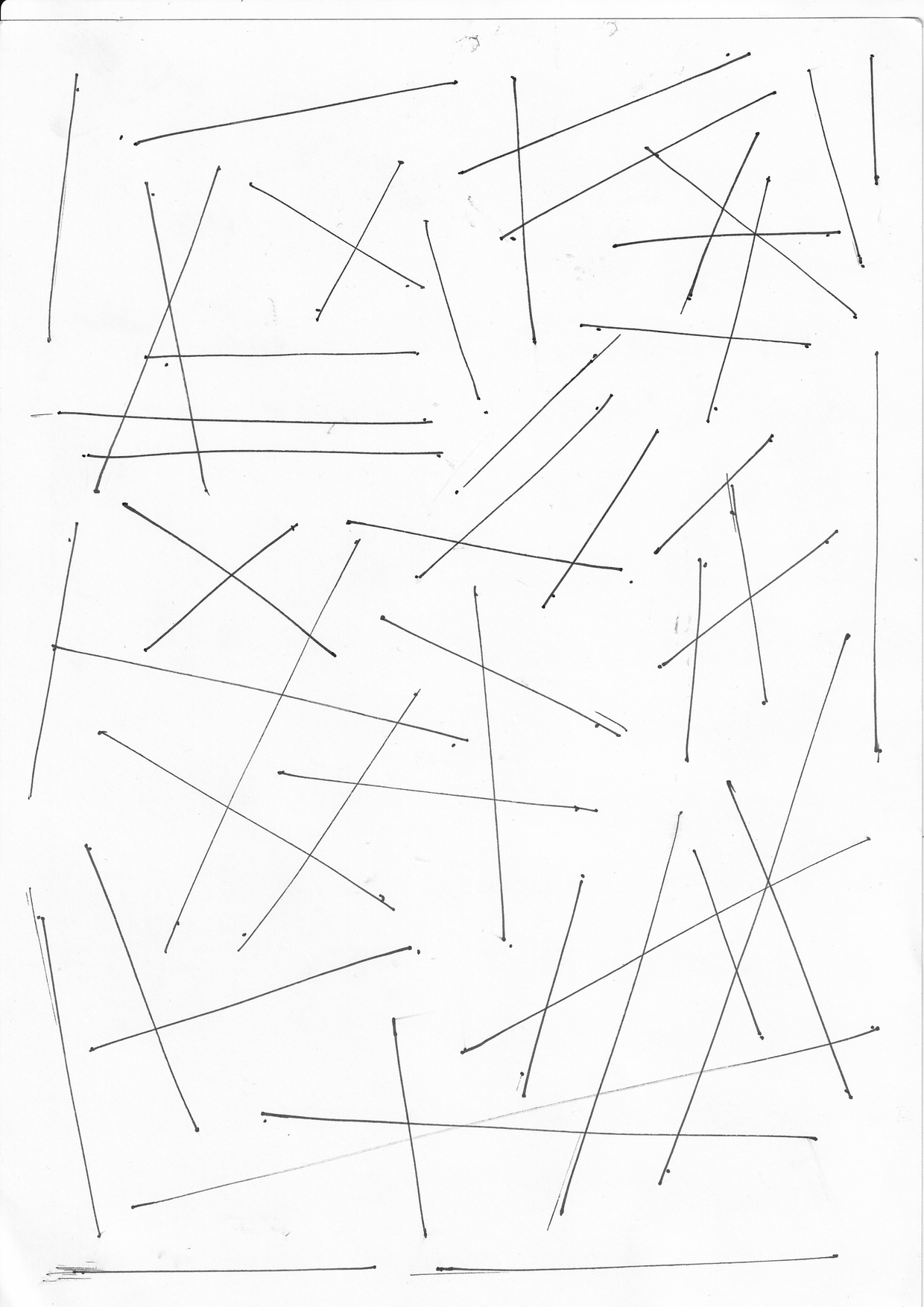
1) is about markmaking: putting two points, then gesturing like you're drawing the line without touching paper, until you are confident and do it. All of the lines in the course have to be made like this. It helps to separate planning a stroke and executing it.
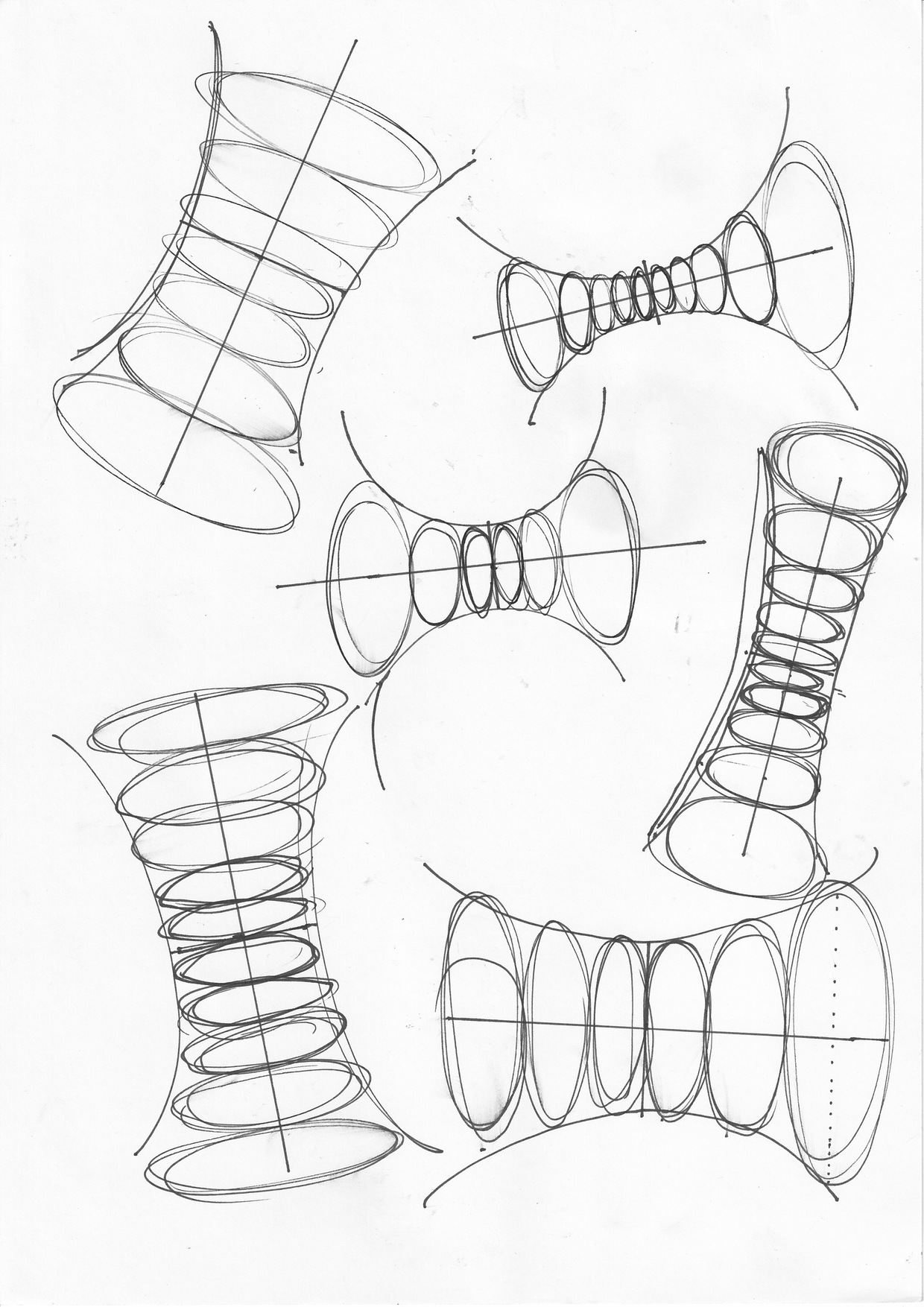
2) the funnel is one of several exercices about ellipses. You must keep the angle of the ellipse regular by using the funnel as a guide. The theory is about the use of the minor axis to build the ellipses.
3) the one point perspective exercice is the most difficult for me, because you have to draw all by hand and guess the angle of the edges in depth, so that they are in the right direction reaching for the VP, without using a ruler. Even using the ghosting method (the one described in 1) I find this super difficult.
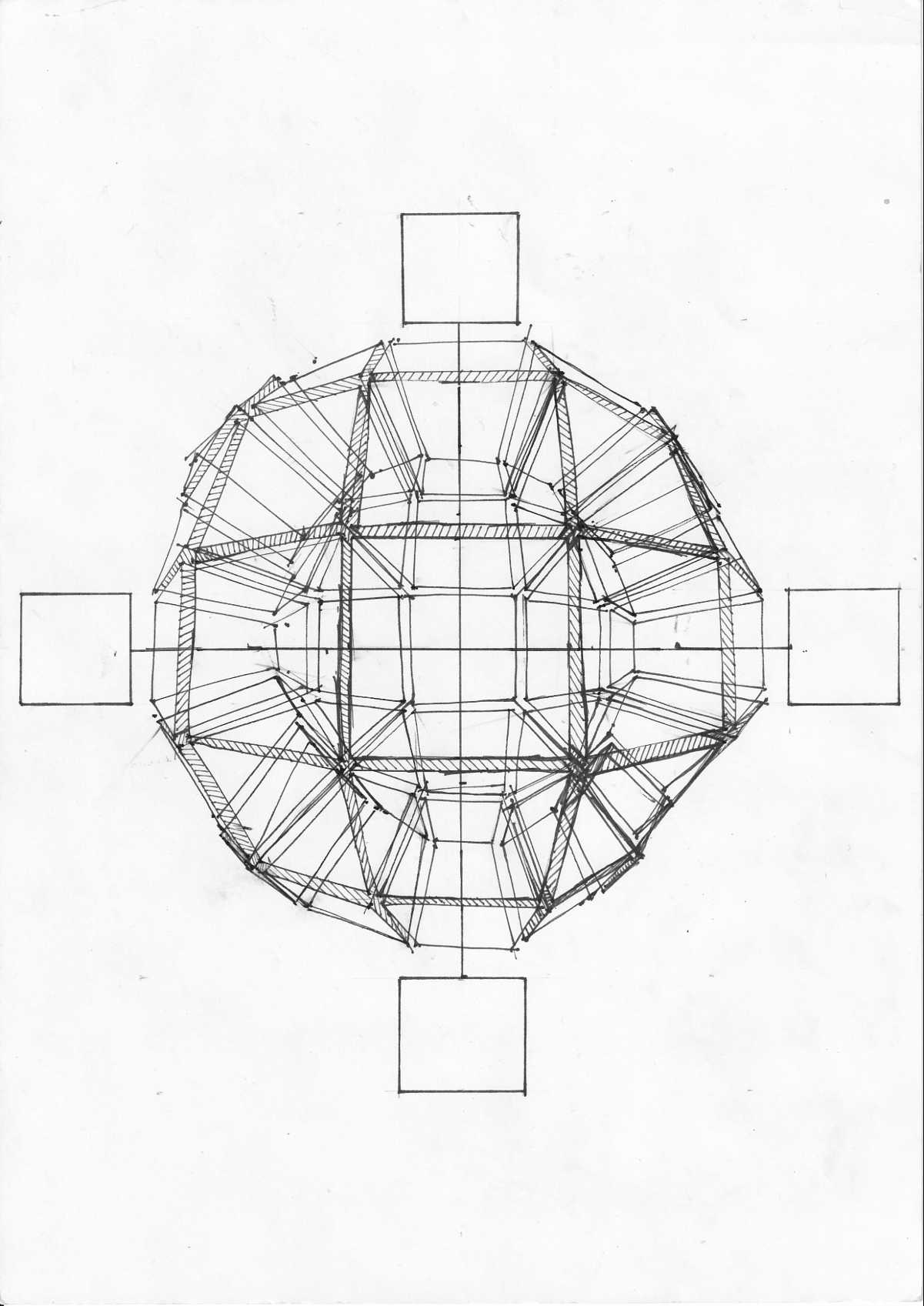
4) in this one you learn to use existing edges as references to rotate boxes instead of going to the VP.
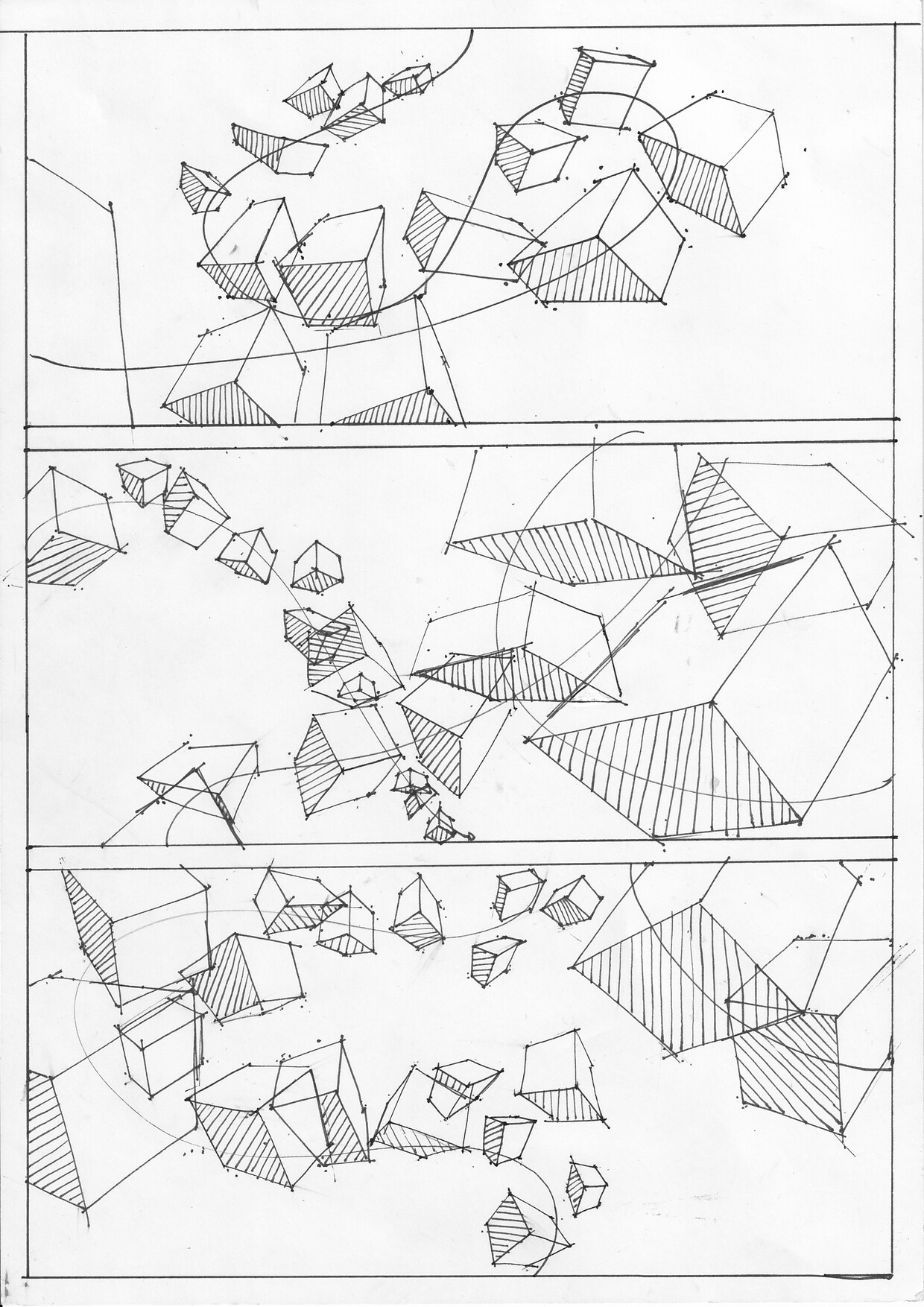
5) the last one is very satisfying to do, I think it's more explicit but you focus on guessing the end points of the parallel edges in depth in three dimensions, without using vanishing points while rotating the boxes randomly. You use a Y shape to draw the closest edges before doing the parts that are in depth.
Yay congrats! these look good! I like how these exercises really get down to basics of drawing. I remember going through those exercises as well. I don't think i ever did quite as many boxes and cylinders as they suggested though lol





![[Image: Pas-mal-non-c-est-francais-1681120.jpg]](https://images.bfmtv.com/yXzk_wJ1gEVp9uJEWlKF3OfLfUU=/0x0:0x0/1200x0/images/Pas-mal-non-c-est-francais-1681120.jpg)